Big Bear bald eagle Jackie’s cause of death revealed


By Dean Fioresi
Big Bear bald eagle Jackie’s cause of death has been revealed nearly two months after she died in August, following weeks of testing and rehabilitation.
According to the California Department of Fish and Wildlife, a necropsy and additional testing determined that Highly Pathogenic Avian Influenza, or HPAI, was the “primary underlying cause of her decline.”
“In an uncommon presentation of the virus, the infection caused a severe ulcer in her stomach that led to persistent internal bleeding, anemia, and the development of bacterial sepsis,” said Steve Kubiski, the Director of Disease Investigations with the San Diego Zoo Wildlife Alliance, which performed the necropsy.
Jackie, who was estimated to be around 14 years old, died nearly a month after she was rescued from the Big Bear Lake shoreline, where she was found after being seen in a fight with two subadult eagles in July.
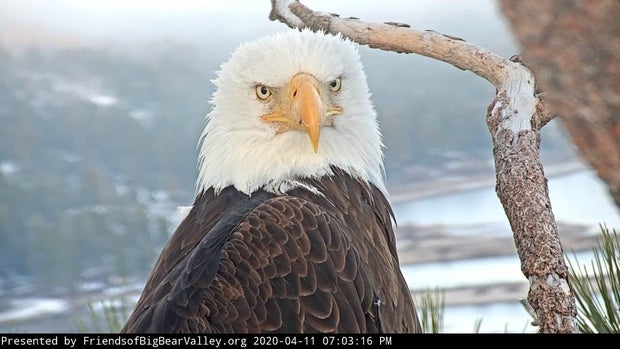
A team of veterinary experts at the Ojai Raptor Center oversaw her care in the weeks that followed, documenting the process as they tried to nurse her back to health. Despite undergoing a blood transfusion, which briefly provided a glimpse of hope, Jackie continued to suffer setbacks in her recovery due to the sickness, which remained a mystery until Wednesday’s announcement by California wildlife officials.
“Jackie showed signs of chronic disease involving the ventriculus, the muscular portion of a bird’s stomach, commonly called the gizzard. The damaged and ulcerated tissue contributed to ongoing blood loss and her persistent severe anemia,” the CDFW release said. “It also allowed bacteria to enter the body, resulting in a serious secondary bacterial infection.”
Officials said that additional testing also revealed severe inflammation and blood clot formation in Jackie’s heart and several major blood vessels, and that the HPAI virus genetic material was present in several tissues throughout her body, including the ulcerated tissue in her ventriculus. Other tests showed Jackie was negative for West Nile Virus, and heavy metal levels were within acceptable limits.
While toxicology screening detected brodifacoum, an anticoagulant rodenticide, in Jackie’s liver, the necropsy did not find uncontrolled bleeding typically associated with the chemical pesticide, so it was not identified as her primary cause of illness or death.
“Together, the findings showed that Jackie was suffering from multiple severe and interconnected disease processes that had been developing over time and ultimately led to her decline and death,” CDFW’s release said.
Jackie’s remains were cremated by the U.S. Fish and Wildlife Service’s National Eagle Repository, following the established procedures intended to prevent the transmission of HPAI to wildlife or humans, the release said.
“The story of the Big Bear bald eagle reflects the powerful connection people feel to these iconic birds,” said a statement from CDFW Director Meghan Hertel. “We’re grateful to everyone who cared for her and worked to support her well-being. Understanding the results of these tests is an important part of learning from this case and can help inform the care and treatment of other eagles and wildlife in the future.”
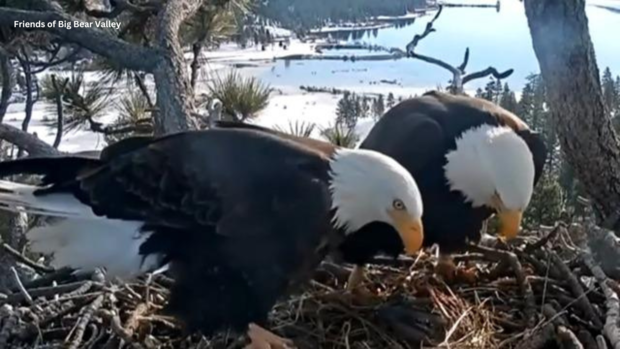
Jackie was an iconic fixture in Southern California, drawing the attention of millions across the United States thanks to the 24/7 livestream camera documenting her life and that of her partner, Shadow, from above Big Bear Lake. Over the years, the duo parented several clutches of eaglets, most recently Sandy and Luna.
CDFW officials said that based on camera data, they have no evidence to suggest that Shadow or the eaglets were sick.
“Jackie’s story brought unprecedented public attention to bald eagles and the importance of protecting the habitats they depend on,” the release from CDFW said. “Her life and the public’s connection to her highlights the powerful role that wildlife can play in connecting people to conservation.”
In the weeks since her death, Jackie has been honored with a massive memorial service in Big Bear, a life-size monument at a park in the San Bernardino Mountains and an Ontario Tower Buzzers minor league baseball game dedicated to celebrating her life. California state legislators also passed a resolution in her honor, proclaiming September 4 as California Wildlife Day.


