Sunnyvale police seize flavored vapes, other illegal products at smoke shops


By Carlos E. Castañeda
Sunnyvale police raided smoke shops across the city and seized thousands of illegal products over the past two months, the city’s Department of Public Safety said.
The operation was in response to community concerns about the accessibility of tobacco products to minors, the DPS said in a social media post on Monday. The department worked with the state Department of Tax and Fee Administration and the Santa Clara County District Attorney’s Office to inspect businesses and seize illegal products.
Most of the products were flavored nicotine vapes, which accounted for 76% of the items seized. Other items seized included flavored tobacco products, kratom, 7-OH, and cannabis. The operation resulted in the seizure of more than 7,000 illegal products valued at more than $114,000, the DPS said.
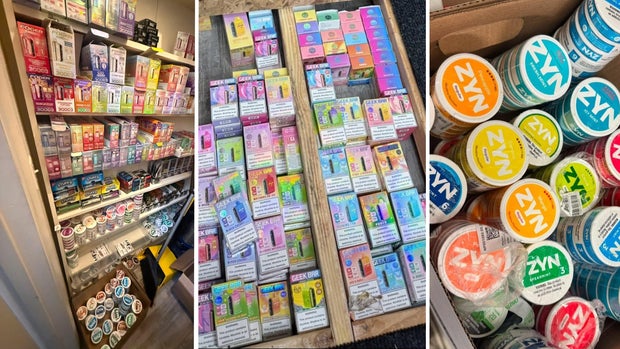
The department said it had issued verbal warnings to smoke shops owners before the inspections at eight smoke shops across the city. Investigators also attempted to purchase illegal products that are often marketed toward youth, the DPS said. Business owners were cited with and violation notices were also issued to property owners, and the DPS said it would conduct follow-up inspections to ensure the shops are complying with state and local laws.
In June, the Sunnyvale City Council extended a 45-day moratorium on new smoke shop permits through May 2027 in order to draft long-term regulations on smoke shops, including zoning restrictions, and buffer zones near schools and daycare centers. Of the eight smoke shops in Sunnyvale, four have opened within the past two years, San Jose Spotlight reported.
California law prohibits the sale of most flavored tobacco and nicotine products. The state also prohibits the sale of kratom, a plant that produces stimulant effects at low doses and opioid-like effects at high doses, as well as its extract 7-OH (7-hydroxymitragynine), commonly made by chemically modifying the mitragynine component of kratom.
The U.S. Food and Drug Administration warns people to avoid both kratom and 7-OH because they have not been proven safe and can act as potent opioids, carrying risk of addiction and overdose.


