Closure of San Francisco immigration court puts additional strain on Northern California immigration court system


By Katie Nielsen
The recent closure of an immigration court in San Francisco is adding to the strain on the Northern California immigration court system and on immigrants trying to navigate it.
Most of the cases that were being handled at the 100 Montgomery Street building in the city’s Financial District are being moved about 30 miles east to the Concord Immigration Court.
Jeremiah Johnson used to be a federal immigration judge until he was among among a group of San Francisco immigration judges fired as part of a nationwide purge by the Trump administration. Since 2025, the Trump administration has fired, retired, or forced out more than 200 immigration judges amid a backlog of 3.3 million cases.
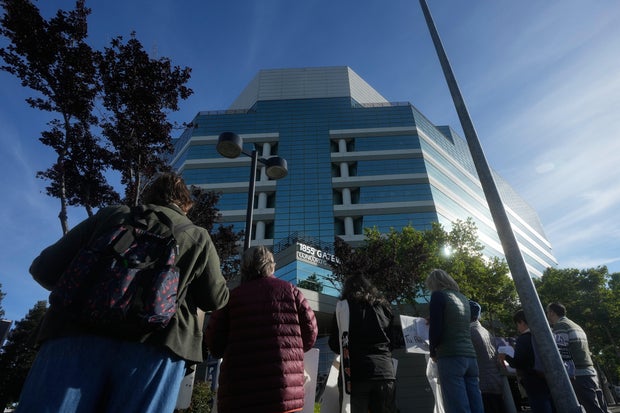
“I had served for eight years in San Francisco and learned that this past November I was fired with no cause given and it was through an email,” Johnson said.
Johnson still hasn’t found a new job, but more than that, he says he’s worried about the reasons behind the court’s closure.
“I think by firing judges, you reduce the number of people that can hear these cases. You’re sending a chilling effect to others,” Johnson said. “And in essence, you are basically saying, ‘No more hearings, we’re not going to have a full and fair hearing.'”
“Now we’re getting cases set for 2029, even 2030,” immigration attorney Ghassan Shamieh said. He’s representing clients whose cases are working their way through the system – cases that have all now been transferred to Concord.
Shamieh said the message from the Trump administration was very clear.
“If you don’t acquiesce to what we want, if you don’t bend the knee, this will be your fate,” Shameih said. “We will not only fire you, but we will close the courts down and prevent cases from being heard and move them so that they are delayed.”
In a statement in May, the U.S Department of Justice said closing the San Francisco courthouse was a cost-savings move. With the closure of the San Francisco courthouse in May, there are now only two federal immigration courts to serve the approximately 12 million residents of Northern California – Concord and Sacramento.
When asked about the impact of the closure on cases in Concord, a DOJ spokesperson blamed the backlog of cases on the Biden Administration for “… allowing millions of unvetted migrants into our communities. Reducing the immigration court backlog remains one of the highest priorities for this administration. The Justice Department is restoring integrity to our immigration system by hearing cases fairly, expeditiously, and uniformly, in accordance with the law.”
In May, the Trump administration onboarded more than 80 new federal immigration judges, who the administration has publicly referred to in ads and job listings as “deportation judges,” including in one ad calling for applicants to “deliver justice to criminal illegal aliens.”
At the time, Acting Attorney General Todd Blanche said the Trump administration was “committed to reestablishing an immigration judge corps that is dedicated to restoring the rule to the law in our nation’s immigration system.”
Immigration courts are not part of the judiciary, and are instead overseen by the executive branch and the Department of Justice.
“The administration of these courts is deplorable,” said Democratic Rep. Mark DeSaulnier, whose district covers the majority of Contra Costa County including Concord. “And that goes right to the top to the president of the United States. So I’m very concerned because it’s a mess and it affects not just the people directly involved, but it directs the community as well.”
Johnson says the other issue is Concord’s courthouse is smaller, originally designed to take pressure off the San Francisco courts, never to replace it.
“Out of the 21 judges that were my colleagues in San Francisco, there’s only two left that are still on the bench,” Johnson said. “The other judges in Concord is nowhere near the amount of judges that they have capacity for.”
The nonpartisan Transactional Records Access Clearinghouse, a research center that gathers federal government data on enforcement, staffing and spending, reported that over 100,000 immigration court cases were closed last month, the most for a single month in court history. The surge was driven by a 30% jump in deportation orders between March and June. Meanwhile, the percentage of peole granted asylum in the country dropped from 31% in February 2025 to an all-time low of 5% this past February, TRAC showed.


